You Are Not Alone
So, over the last week, I’ve noticed a question keeps coming up—or maybe a statement keeps coming up—and it is the sentence, “You are not alone.”
Now, that sentence kind of packs a big punch. And I wanted to take this post to show that it’s very true that you are not alone. But that’s easier said than done.
I know when I was first getting sober, or even in the depths of my addiction, all I ever thought about was how alone I was. Back then, I didn’t think there was anybody who wanted anything to do with me. I thought that people didn’t like me. If I wanted help, I didn’t think there was anybody out there who could help me.
I just assumed that I was destined to live this degenerate lifestyle forever.
And it can be very difficult to ask for help. I mean, we see it on the streets every single day—people walking up and down the streets, lost souls. If somebody just reached out a hand and asked them if they needed help, you’re not going to get a lot of hands reaching back, but I know you’ll get some. And they’ll come along for the journey that we’re all on.
This recovery journey is not meant to be taken alone, and you don’t have to be alone.
The Community I Found in Recovery
That’s been one of the most beautiful things that I’ve found in my recovery: the community that you can be involved in if you just put yourself out there a little bit.
At first, it was really hard. I was antisocial and socially awkward. I had spent years secluding myself from people. So when I finally got sober and wanted to put myself out there, it took some practice. It took some energy to put myself into situations where I actually had to say hi to somebody, ask them how they’re doing, or strike up random conversations in the elevator.
But it didn’t start with that.
If anything, it started with having a little bit of community from the treatment centre. You know, spending three months inside a treatment facility, you gain some good friendships with the people who are living there alongside you.
Lucky for me, I was able to create some of those friendships. Friendships that I still have to this day, and unfortunately, friendships that ended because they are no longer with us.
That’s a sad reality in the world of addiction and recovery. While I want everybody to make it, the sad truth is that’s just not the case.
But it reiterates the fact that we are not alone.
You are not alone.
I am not alone.
The friends that I lost were not alone.
But I know if I could go back in time and ask them, they would tell you that they felt like they were alone.
Jamie
One of the best friendships I had when I went to Claresholm was with a guy I’ll call Jamie. I’ve changed his name here out of respect for his privacy and the privacy of those who knew and loved him.
Jamie was an amazing soul, the type of person who would message you at any time of the day just to see how you were doing, let you know what was going on with his life, and stay connected.
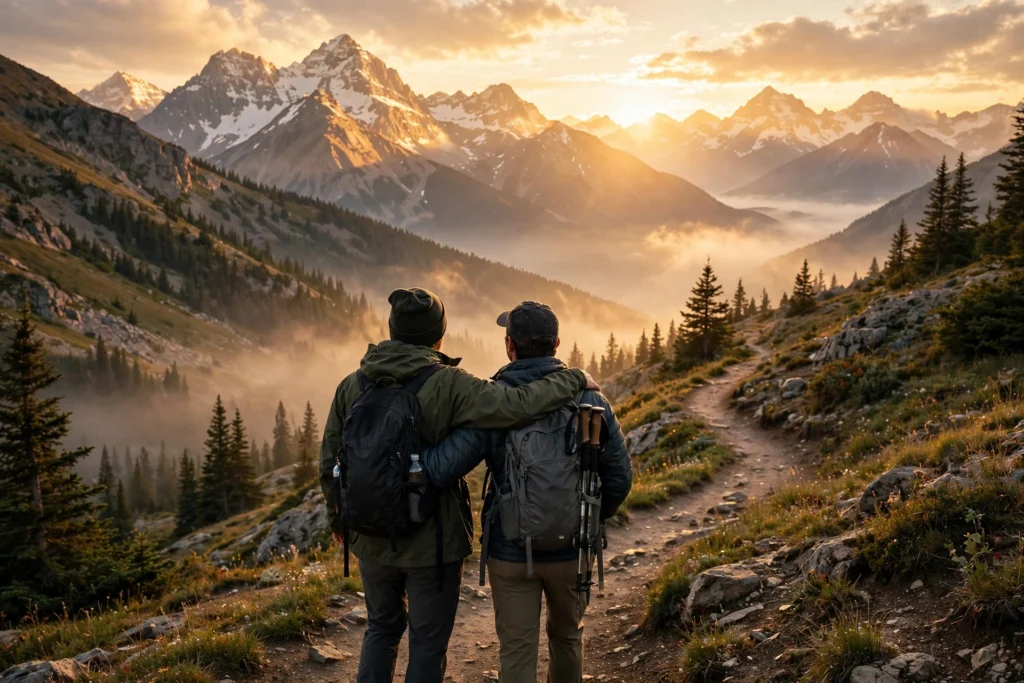
Immediately after leaving the treatment centre, we bonded a lot. We would go out to the mountains and hike in Kananaskis Country. We would go to meetings together, go bowling. And tag along with a lot of the other people we got sober with.
But on a personal level, Jamie and I developed a good friendship.
When Life Got Busy
Unfortunately, life would get ahold of both of us. He got busy doing what he was doing. And I moved back to Ontario and got busy doing what I was doing.
The messages went from talking to each other every single day, to every couple of days, then maybe once a month.
Then I noticed that I hadn’t received a message from Jamie in quite some time.
I sent him a message and didn’t hear back for a couple of days, which was unlike Jamie. If he saw a message from me, he was going to respond pretty quickly.
So I decided to go to his Facebook and see what he had been up to.
Losing Jamie
That’s when I was devastated to see that my friend had taken his own life.
It felt like a piece of the community I had been forming had just been ripped away from me. I felt responsible. I felt sad and angry and all the emotions that come with losing a friend.
But I knew it was important not to fall back on old lifestyle choices just because I was an emotional wreck from this news.
I had tools that I had learned through SMART Recovery, treatment, and CBT that could help me get through this roller coaster of feelings and come out the other side stronger than ever.
And that’s exactly how I used this experience.
What Losing Jamie Taught Me
Losing Jamie also reinforced something that I’ve come to understand about isolation. I couldn’t control whether everyone I cared about would reach out when they were struggling, but I could control whether I continued reaching out to others and whether I allowed other people into my own life. I didn’t want losing someone I cared about to cause me to retreat back into isolation myself.
It didn’t deter me from continuing with the communities I was building. I made sure to keep up my practice of reaching out to people who needed to be reached out to, striking up conversations, putting myself out there in public, and not isolating myself so much in my own little world.
You can join communities by going to AA meetings and SMART Recovery meetings. Recently, with my newfound faith, I’ve also found a church community with brothers and sisters who are there for you and always have a hand to reach out.
Challenge the Belief
The truth is that you are not alone.
Even though that feeling can overwhelm somebody—at least it did for me in recovery—it’s a feeling that isn’t necessarily telling us the truth.
And we can put that belief to the test.
We can challenge it and ask ourselves: Is it true that I am alone?
We’re almost always going to find that the statement isn’t true if we put ourselves out there and ask for the help that we need.
That’s all I had to do.
I just had to finally ask for help.
And with that help came an entirely new life. A life worth living. A life where I have my family back, and they have their father and husband back. My parents have their son back, and my brothers have their brother back.
That all came from getting the clarity that came with no longer using and following the guidelines that were laid out in front of me.
Finding Help and Community
It’s also true that you’re not alone when it comes to resources and organizations that are available to help you.
Besides your local church or food bank, your municipality may have addiction counsellors who can be reached. Then there are the recovery programs: SMART Recovery, Narcotics Anonymous, Gamblers Anonymous, Alcoholics Anonymous, Refuge Recovery, Recovery Dharma—you name it.
There are so many different resources out there.
You can check out my Resources page to see some of those resources—organizations and communities that are standing by, waiting to give you a hand.
So, to conclude this, while the feeling that you are alone can be very real, that doesn’t mean the belief itself is true.
You are not alone.
And you don’t have to do this alone.